
If you've spent any time online lately, you've probably come across a term that ends in "-maxxing." Looksmaxxing, sleepmaxxing, productivitymaxxing — Gen Z has turned this suffix into a universal shorthand for optimizing, improving, or pushing something to its absolute limit. The formula is simple: take any noun, add "-maxxing", and suddenly you have a movement. A philosophy. A lifestyle.
At first glance, structural steel and internet subcultures don't seem to have much in common. But the more we thought about it, the more we realized: engineers have been steel-maxxing for over a century. They just never called it that.
What is -maxxing, anyway?
The -maxxing trend took off in online communities as a way to describe the obsessive pursuit of improvement in a specific area. Looksmaxxing is about optimizing your physical appearance. Sleepmaxxing is about getting the perfect night's rest. Gymmaxxing, grindmaxxing, moodmaxxing — the list grows every week as new corners of the internet adopt the format.
The underlying idea, however, is far from new. The obsession with getting the most out of every resource, every decision, every material — that's been the job description of structural engineers since long before TikTok existed.
Steel-Maxxing in practice
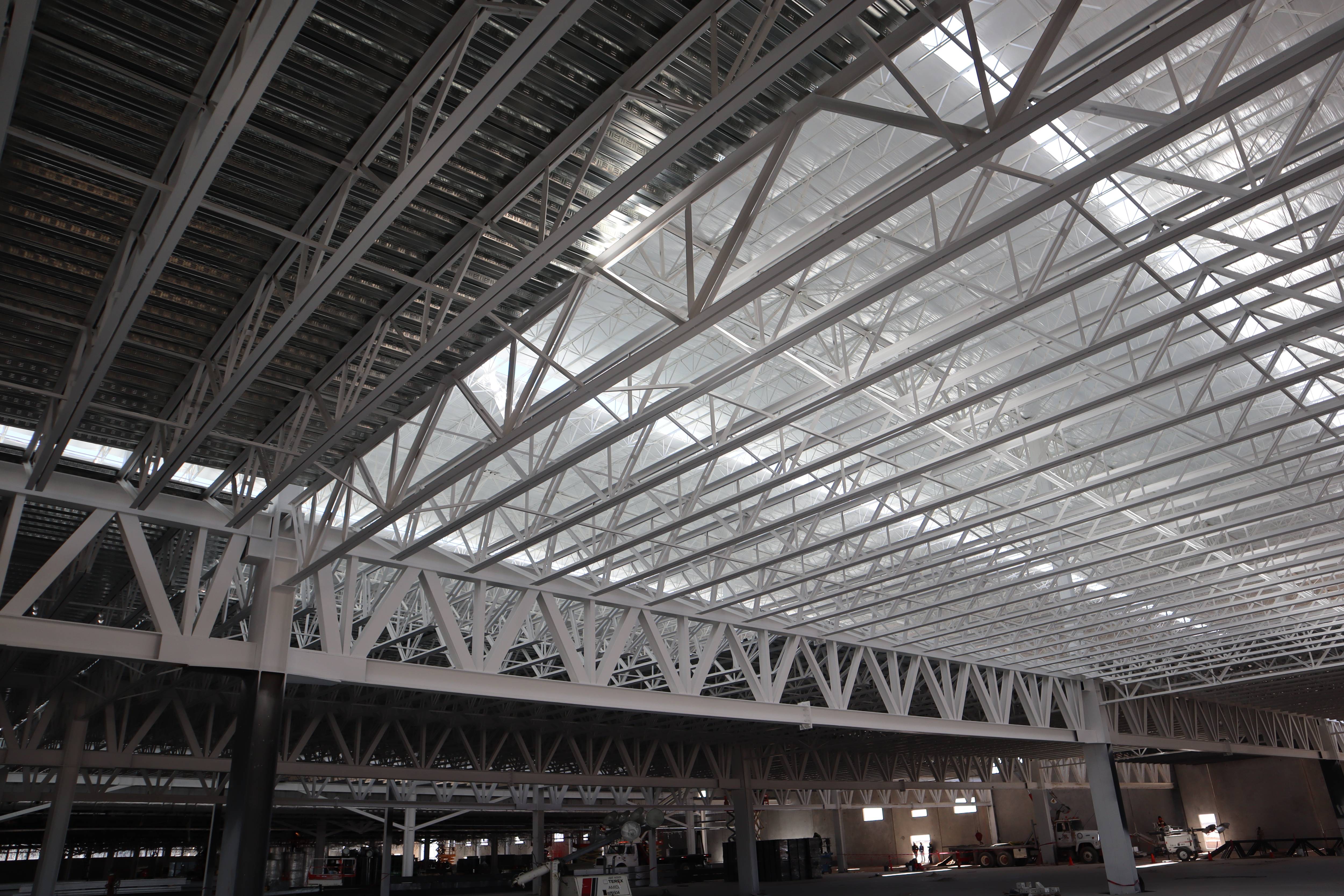
Structural steel is, by nature, a -maxxing material. No other building material offers the same combination of strength-to-weight ratio, design flexibility, speed of erection, and recyclability. When an engineer specifies a steel structure, they are making a series of calculated decisions to maximize performance while minimizing waste — in tonnage, in cost, in construction time.
At Faber by Kalisch, steel-maxxing looks like this in practice: designing connection details that transfer loads with maximum efficiency, fabricating custom sections that eliminate excess material without compromising structural integrity, and coordinating logistics so that steel arrives to site in the exact sequence it needs to be erected. Every decision is an optimization. Every weld, every bolt pattern, every piece of steel placed in the right position is part of a larger effort to get the most out of the structure.
The original optimizers
Think about the great steel structures that define skylines across North America — from industrial warehouses in the Bajío region to distribution centers along the U.S.-Mexico border. None of them happened by accident. Each one is the result of engineers and fabricators who were, in every sense of the word, maxxing their craft.
The pursuit of lighter, stronger, faster-to-build structures has driven decades of innovation in the steel industry. High-strength steel grades that allow thinner members without sacrificing load capacity. Galvanizing processes that maximize the lifespan of a structure in corrosive environments. Pre-engineered systems that compress months of design work into repeatable, optimized solutions. This is what maxxing looks like at an industrial scale.
What Gen Z gets right
There's something we genuinely appreciate about the -maxxing mindset. Behind the memes and the internet jargon is a real philosophy: don't settle for average, pay attention to the details, and always ask whether there's a better way to do something. That's not so different from the continuous improvement principles we practice at Faber by Kalisch — principles that Samuel Kalisch built this company on more than 40 years ago.
Whether it's a new generation optimizing their sleep schedules or a structural engineer optimizing a roof truss for a 50,000 square meter industrial facility, the instinct is the same. Get the most out of what you have. Do it better than it's been done before.
So the next time you come across a new -maxxing trend online, remember that the steel industry has been living this philosophy long before it had a name. And if you're looking for a partner who takes the optimization of your next structural steel project seriously, we'd love to talk.
